

CERAMIC PULLEY LAGGING Manufacturer Stockist Exporter
CERAMIC PULLEY LAGGING Manufacturer Stockist Exporter
CERAMIC PULLEY LAGGING is a high-performance solution developed for conveyor systems operating under extreme wear and load conditions. It combines high-alumina ceramic tiles with a resilient rubber backing. This construction delivers exceptional traction and durability. Ceramic lagging is especially effective in wet, muddy, and abrasive environments. It prevents belt slippage even during high-torque operations. Improved grip enhances power transmission efficiency. Conveyor reliability increases significantly. It is widely used in heavy-duty industrial applications.
The ceramic tiles used in pulley lagging are engineered for superior hardness and wear resistance. High-alumina ceramics outperform conventional rubber lagging in abrasive conditions. The tiles resist surface wear caused by sharp and heavy materials. Uniform tile geometry ensures consistent belt contact. This maintains stable friction across the pulley surface. Even under continuous operation, the tiles retain their shape. Service life is significantly extended. Maintenance frequency is reduced.
Ceramic pulley lagging performs exceptionally well in wet and slurry conditions. The raised ceramic surfaces combined with rubber channels allow efficient water drainage. This prevents hydroplaning between the belt and pulley. Constant friction is maintained during startup and operation. Slippage is minimized even in heavy rainfall. Conveyor stoppages are reduced. System availability improves. Productivity increases across operations.
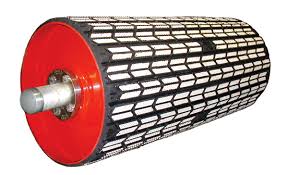
The rubber backing layer plays a critical role in overall performance. It absorbs impact loads during material transfer points. This cushioning effect protects ceramic tiles from cracking. Rubber flexibility compensates for minor pulley surface irregularities. Strong bonding between ceramic and rubber ensures durability. The rubber layer also dampens vibrations. Noise levels are reduced. Conveyor operation becomes smoother.
One of the major advantages of ceramic pulley lagging is its ability to handle high-tension and high-torque applications. The high coefficient of friction allows efficient power transmission. Excessive belt tension is no longer required. Reduced tension lowers stress on bearings and shafts. Mechanical wear on drive components is minimized. Equipment life is extended. Energy efficiency is improved. Operating costs are reduced.
The installation of ceramic pulley lagging can be carried out using hot vulcanization or cold bonding techniques. Proper surface preparation of the pulley shell is essential. Accurate alignment of ceramic tiles ensures uniform load distribution. Installation quality directly affects performance and longevity. Professional application ensures strong adhesion. Post-installation inspection verifies bonding integrity. Correct installation guarantees reliable long-term service.
Our Other Valuable Products


Ceramic pulley lagging is widely used in mining, cement, steel, power generation, and bulk material handling industries. These industries operate in environments with extreme abrasion and moisture. Ceramic lagging performs reliably under continuous heavy-duty conditions. It withstands harsh exposure to dust and slurry. Conveyors handling coal, ore, clinker, and aggregates benefit greatly. System efficiency is maintained. Operational downtime is minimized.
Another important benefit is the reduction in belt and pulley wear. Ceramic surfaces distribute pressure evenly across the belt width. Localized wear and heat buildup are minimized. The belt experiences less surface damage. Rubber backing absorbs shock loads. Replacement intervals are extended. Maintenance schedules become less frequent. Overall maintenance costs decrease significantly. Conveyor availability improves.
Specification of CERAMIC PULLEY LAGGING
| Specification of Ceramic Pulley Lagging | ||
|---|---|---|
| Parameter | Unit | Specification |
| Lagging Type | — | Ceramic Embedded Rubber Lagging |
| Ceramic Material | — | High Alumina (Al2O3) |
| Alumina Content | % | 90 – 95 |
| Ceramic Tile Hardness | Mohs | 8 – 9 |
| Rubber Hardness (Backing) | Shore A | 55 – 65 |
| Total Lagging Thickness | mm | 12 – 25 |
| Ceramic Tile Size | mm | 20 × 20 / 25 × 25 |
| Coefficient of Friction (Dry) | — | 0.90 – 1.10 |
| Coefficient of Friction (Wet) | — | 0.80 – 1.00 |
| Operating Temperature Range | °C | -20 to +100 |
| Abrasion Resistance | — | Excellent |
| Bonding Method | — | Hot Vulcanization / Cold Bonding |
| Suitable Pulley Types | — | Drive, Tail, Bend & Snub Pulleys |
| Application Areas | — | Mining, Cement, Steel, Power & Bulk Material Handling |
Chemical Composition of CERAMIC PULLEY LAGGING
| Chemical Composition of Ceramic Pulley Lagging | ||
|---|---|---|
| Component | Chemical Formula | Typical Composition (%) |
| Aluminium Oxide | Al2O3 | 90 – 95 |
| Silicon Dioxide | SiO2 | 2 – 5 |
| Iron Oxide | Fe2O3 | 0.5 – 1.5 |
| Calcium Oxide | CaO | 0.5 – 1.0 |
| Magnesium Oxide | MgO | 0.2 – 0.8 |
| Sodium Oxide | Na2O | 0.1 – 0.5 |
| Trace Additives & Binders | — | ≤ 0.5 |
Mechanical Properties of CERAMIC PULLEY LAGGING
| Mechanical Properties of Ceramic Pulley Lagging | ||
|---|---|---|
| Property | Unit | Typical Value |
| Ceramic Tile Hardness | Mohs | 8 – 9 |
| Compressive Strength | MPa | 2000 – 2500 |
| Flexural Strength | MPa | 250 – 350 |
| Density | g/cm³ | 3.6 – 3.9 |
| Abrasion Resistance | — | Excellent |
| Coefficient of Friction (Dry) | — | 0.90 – 1.10 |
| Coefficient of Friction (Wet) | — | 0.80 – 1.00 |
| Impact Resistance | — | High (Rubber Backed) |
| Operating Temperature Range | °C | -20 to +100 |
| Adhesion Strength to Metal | N/mm | ≥ 6 |
Ceramic pulley lagging also contributes to improved safety and operational stability. Reduced slippage lowers the risk of belt failure and accidents. Stable belt movement enhances system control. Lower vibration levels protect structural components. Safer working conditions are achieved. Noise reduction improves operator comfort. Conveyor monitoring becomes easier. Compliance with industrial safety standards is enhanced.
Pipe Testing Methods

Pipe Applications

We supply Pipes Worldwide.
Exporting Steel Pipes & Tubes to over 60 countries including Afghanistan, Albania, Andorra, Angloa, Austria, Australia, Bahrain, Bangladesh, Bhutan, Brazil, Brunei, Belarus, Belgium, Bulgaria, Cambodia, China, Cyprus, Croatia, Czech Republic, Canada, Denmark, Estonia, Egypt, Finland, France, Germany, Greece, Georgia, Hungary, Iceland, Ireland, Italy, Indonesia, Iran, Iraq, Israel, Japan, Jordan, Kazakhstan, Kuwait, Kyrgyzstan, Lebanon, Latvia, Latin America, Liechtenstein, Lithuania, Luxembourg, Malta, Madagascar, Mexico, Moldova, Monaco, Malaysia, Maldives, Mongolia, Myanmar (Burma), Nepal, New Zealand, North Korea, Netherlands, Norway, Nigeria, Oman, Poland, Portugal, Pakistan, Palestine, Philippines, Qatar, Russia, Romania, Russia, San Marino, Serbia and Montenegro, Slovakia, Slovenia, Spain, Sweden, Switzerland, Saudi Arabia, Singapore, South Korea, South Africa, Sri Lanka, Sudan, Syria, Taiwan, Tanzania, Tajikistan, Thailand, Turkey, Turkmenistan, Ukraine, United Kingdom, United Arab Emirates (UAE), Uzbekistan, Venezuela, Vietnam, Yemen, etc.