



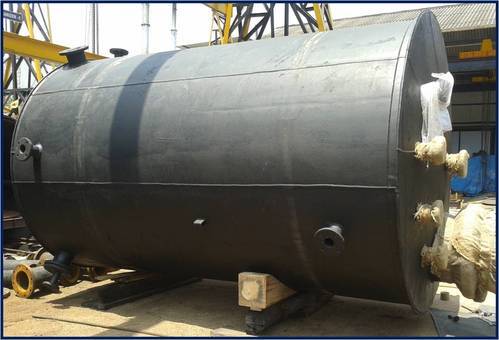
An MSRL HCL Tank is a Mild Steel Rubber Lined tank designed for safe storage of hydrochloric acid and other corrosive chemicals. The rubber lining prevents chemical corrosion of the steel body.

MSRL HCL Tank Manufacturer, Stockist & Worldwide Exporter in India
Synergy Engineering Solution is a globally trusted ISO certified manufacturer, stockist, and exporter of high-performance MSRL HCL Tanks, delivering advanced corrosion-resistant storage solutions for hazardous and industrial chemical applications. With over 10+ years of engineering expertise, we specialize in manufacturing Mild Steel Rubber Lined (MSRL) tanks designed specifically for safe storage of Hydrochloric Acid (HCL) and other aggressive chemical substances.
Our MSRL HCL Tanks are engineered using high-grade mild steel structures internally lined with high-quality rubber lining systems that provide exceptional resistance against chemical corrosion. These tanks are widely used in chemical processing plants, fertilizer industries, steel pickling units, pharmaceutical industries, water treatment plants, and industrial acid storage systems. The rubber lining acts as a protective barrier, ensuring safe containment of highly corrosive HCL without damaging the steel structure.
At Synergy Engineering Solution, we focus on delivering safe, durable, and industry-compliant chemical storage solutions. Every MSRL HCL Tank is designed and fabricated under strict engineering standards with precision welding, rubber lining application, and quality testing procedures to ensure zero leakage, maximum safety, and long-term operational reliability.
Company Overview – Synergy Engineering Solution
Synergy Engineering Solution is a leading engineering company based in Mumbai, India, specializing in manufacturing, stocking, and exporting industrial piping systems and chemical storage solutions. We are known for delivering high-quality engineered products that meet global safety and performance standards.
With a strong foundation in engineering excellence and innovation, we have established ourselves as a trusted supplier of MSRL HCL Tanks and other industrial storage systems across domestic and international markets. Our manufacturing facility is equipped with advanced fabrication and rubber lining technology, enabling us to produce high-performance chemical storage tanks.
We have a strong global export presence in over 60+ countries, with significant demand from the Middle East region including UAE, Saudi Arabia, Qatar, Oman, Kuwait, Bahrain, Iraq, Jordan, and Egypt. These markets rely on our MSRL HCL Tanks for safe chemical storage in critical industrial applications.
Our commitment to quality, safety, and customer satisfaction has helped us build long-term relationships with EPC contractors, chemical industries, government projects, and large-scale industrial clients worldwide.
High-Performance MSRL HCL Tanks for Safe Acid Storage
MSRL HCL Tanks (Mild Steel Rubber Lined Tanks) are specially designed for safe storage of hydrochloric acid and other corrosive chemicals. These tanks combine the structural strength of mild steel with the chemical resistance of rubber lining, ensuring maximum safety and durability in aggressive chemical environments.
Unlike conventional steel tanks that corrode quickly when exposed to acids, MSRL tanks are internally coated with specialized rubber linings that prevent direct contact between the chemical and steel surface. This significantly extends the service life of the tank and reduces maintenance costs.
Synergy Engineering Solution ensures each tank is fabricated with precision engineering, followed by high-quality rubber lining application and rigorous inspection to meet industrial safety standards. This makes our MSRL HCL Tanks highly reliable for continuous industrial usage in chemical plants and processing industries.
Applications of MSRL HCL Tanks
MSRL HCL Tanks manufactured by Synergy Engineering Solution are widely used in industries where safe storage of highly corrosive hydrochloric acid (HCL) and other aggressive chemicals is required. These tanks are engineered to provide maximum chemical resistance, structural stability, and long-term operational safety in demanding industrial environments.
Due to their rubber-lined internal surface and strong mild steel outer shell, MSRL HCL Tanks are considered one of the safest and most reliable solutions for acid storage applications across chemical processing industries worldwide.
- Hydrochloric Acid (HCL) Storage Systems
- Chemical Processing Plants
- Steel Pickling Industries
- Fertilizer Manufacturing Units
- Pharmaceutical Chemical Storage
- Water Treatment Chemical Dosing Systems
- Petrochemical Processing Plants
- Industrial Acid Storage Facilities
- Electroplating Industries
- Metal Finishing Plants
- Mining Chemical Processing Units
- Paper & Pulp Industries
- Power Plant Chemical Handling Systems
- Industrial Effluent Treatment Plants
- Desalination Chemical Storage Systems
Features of MSRL HCL Tanks
MSRL HCL Tanks are engineered with advanced fabrication techniques and high-quality rubber lining systems to ensure superior chemical resistance and long-term durability. These tanks are designed to safely store highly corrosive hydrochloric acid without structural degradation or leakage risks.
- High-Grade Mild Steel Outer Structure
- Premium Rubber Lining for Acid Resistance
- Leak-Proof Welded Construction
- Excellent Chemical Corrosion Resistance
- High Structural Strength and Stability
- Customizable Tank Design and Capacity
- Suitable for Highly Corrosive Liquids
- Long Service Life with Minimal Maintenance
- Available in Vertical and Horizontal Designs
- Precision Fabrication and Engineering
- Safe Storage for Hydrochloric Acid (HCL)
- High Temperature and Pressure Resistance
- Industrial Grade Performance Reliability
- Internally Rubber Lined for Protection
- International Standard Manufacturing Quality
Advantages of MSRL HCL Tanks
MSRL HCL Tanks offer significant advantages over conventional steel or plastic chemical storage systems. Their dual-layer construction (mild steel + rubber lining) ensures maximum protection against corrosive chemicals while maintaining excellent structural strength.
At Synergy Engineering Solution, every MSRL tank is designed to provide long-term safety, reduced maintenance costs, and reliable performance in harsh chemical environments. These advantages make them highly preferred in global chemical industries.
- Superior Resistance to Hydrochloric Acid Corrosion
- Extended Operational Lifespan
- Leak-Proof and Safe Storage Design
- High Mechanical Strength from MS Body
- Cost-Effective Compared to Alloy Tanks
- Low Maintenance Requirements
- High Safety Standards for Chemical Storage
- Custom Fabrication as per Industry Needs
- Reliable Performance in Continuous Operation
- Suitable for Heavy Industrial Usage
Manufacturing Process of MSRL HCL Tanks
At Synergy Engineering Solution, MSRL HCL Tanks are manufactured using a highly controlled and precise engineering process to ensure maximum safety and chemical resistance. The process begins with the selection of high-quality mild steel plates that are tested for strength, thickness, and structural integrity.
The steel plates are then cut, rolled, and welded into the required tank shape using advanced fabrication machinery. Skilled welders ensure strong and leak-proof joints that can withstand industrial pressure and chemical loads.
After fabrication, the internal surface of the tank undergoes thorough surface preparation to ensure proper adhesion of rubber lining. High-quality rubber lining material is then applied in multiple layers and vulcanized under controlled conditions to create a strong chemical-resistant barrier.
Each MSRL HCL Tank is then subjected to rigorous quality testing including spark testing, hydro testing, dimensional inspection, and rubber lining integrity checks before final approval for dispatch.
Why Choose Synergy Engineering Solution?
Synergy Engineering Solution is a trusted global manufacturer, stockist, and exporter of MSRL HCL Tanks with a strong reputation for delivering safe and high-quality chemical storage solutions. With over a decade of engineering experience, we provide industry-leading fabrication and rubber lining solutions.
We are committed to delivering high-performance MSRL HCL Tanks that meet international safety standards and chemical industry requirements. Our strong export network ensures timely delivery across India and global markets, especially in the Middle East region.
- ISO Certified Manufacturing Company
- 10+ Years of Industrial Experience
- Strong Export Presence in Middle East & Worldwide
- Advanced Rubber Lining Technology
- Strict Quality Control System
- Custom Design & Fabrication Capability
- Competitive Global Pricing
- Timely Delivery and Logistics Support
- Highly Skilled Engineering Team
- Trusted by Global Chemical Industries
Our Other Valuable Products
Chemical Properties of MSRL HCL Tanks
MSRL HCL Tanks are manufactured using high-quality mild steel combined with specialized rubber lining systems that provide excellent resistance against hydrochloric acid and other aggressive chemicals. The steel structure ensures mechanical strength, while the rubber lining acts as a protective barrier against corrosion and chemical attack.
| Component | Typical Composition (%) |
|---|---|
| Iron (Fe) | 98.0 – 99.2% |
| Carbon (C) | 0.05 – 0.25% |
| Manganese (Mn) | 0.30 – 0.90% |
| Silicon (Si) | 0.10 – 0.35% |
| Phosphorus (P) | < 0.04% |
| Sulfur (S) | < 0.05% |
| Rubber Lining Layer | High Acid Resistant Polymer |
Mechanical Properties of MSRL HCL Tanks
The mechanical strength of MSRL HCL Tanks ensures safe storage of corrosive chemicals under varying pressure and temperature conditions. The mild steel outer shell provides structural integrity, while the rubber lining ensures chemical protection without compromising mechanical performance.
| Property | Typical Value |
|---|---|
| Tensile Strength | 410 – 550 MPa |
| Yield Strength | 250 – 350 MPa |
| Elongation | 20 – 28% |
| Hardness | 120 – 180 HB |
| Density | 7.85 g/cm³ |
| Impact Resistance | High |
| Operating Temperature | -10°C to 120°C (with lining) |
| Service Life | 15 – 25+ Years |
Quality Testing of MSRL HCL Tanks
At Synergy Engineering Solution, every MSRL HCL Tank undergoes strict quality testing to ensure maximum safety, reliability, and chemical resistance. Our ISO-certified quality control system ensures that each tank meets international industrial standards before dispatch.
We perform multiple inspection stages throughout the manufacturing process, including fabrication checks, rubber lining verification, and final performance testing. This ensures complete protection against leakage, corrosion, and structural failure.
- Raw Material Inspection
- Dimensional Accuracy Testing
- Welding Quality Inspection
- Rubber Lining Thickness Test
- Spark Testing for Lining Integrity
- Hydrostatic Pressure Testing
- Leak Detection Testing
- Surface Finish Inspection
- Load Bearing Evaluation
- Final Quality Approval Check
Industries We Serve
MSRL HCL Tanks are widely used in industries where safe storage of corrosive chemicals is critical. Synergy Engineering Solution supplies these tanks to a wide range of industries across India and international markets, with strong demand in the Middle East region.
- Chemical Manufacturing Industries
- Steel Pickling Plants
- Fertilizer Industries
- Pharmaceutical Manufacturing Units
- Petrochemical Plants
- Water Treatment Facilities
- Electroplating Industries
- Mining Chemical Processing
- Paper & Pulp Industries
- Power Generation Plants
- Oil & Gas Refineries
- Industrial Effluent Treatment Plants
- Desalination Plants
- Marine Chemical Storage Units
- Heavy Engineering Industries
Worldwide Exporter of MSRL HCL Tanks with Strong Middle East Presence
Synergy Engineering Solution is a leading worldwide exporter of MSRL HCL Tanks, supplying high-performance chemical storage systems to clients across Asia, Africa, Europe, and the Middle East. Our tanks are engineered for safe handling of hydrochloric acid (HCL) and other corrosive chemicals, making them highly demanded in global industrial sectors.
We have a strong export footprint in the Middle East region, where chemical industries require highly reliable corrosion-resistant storage systems. Our MSRL HCL Tanks are widely supplied to UAE, Saudi Arabia, Qatar, Oman, Kuwait, Bahrain, Iraq, Jordan, and Egypt. These regions depend on our engineered solutions for steel pickling plants, fertilizer industries, petrochemical complexes, and water treatment facilities.
Our export operations are supported by safe packaging, professional logistics coordination, and complete documentation assistance. This ensures smooth international shipments and compliance with global trade standards. We also offer customized fabrication and rubber lining solutions based on client-specific chemical storage requirements.
Frequently Asked Questions (FAQ)
What is an MSRL HCL Tank?
Why is rubber lining used in HCL tanks?
Rubber lining acts as a protective barrier between the chemical and steel surface, preventing corrosion, leakage, and structural damage caused by hydrochloric acid.
Do you export MSRL HCL Tanks to the Middle East?
Yes, Synergy Engineering Solution exports MSRL HCL Tanks to UAE, Saudi Arabia, Qatar, Oman, Kuwait, Bahrain, Iraq, Jordan, and Egypt with complete export documentation support.
What is the lifespan of MSRL HCL Tanks?
The lifespan of MSRL HCL Tanks is typically 15–25+ years depending on usage conditions, chemical concentration, and maintenance practices.
Can MSRL HCL Tanks be customized?
Yes, we manufacture customized MSRL HCL Tanks in various sizes, capacities, designs, and rubber lining specifications as per industrial requirements.
A Leading Manufacturer and Stockist of Pipes.