

Nuclear Power Plant Tank With Inside Rubber Lining Exterior FRP Manufacturer Stockist Exporter
Nuclear Power Plant Tank With Inside Rubber Lining Exterior FRP Manufacturer Stockist Exporter
A nuclear power plant tank with inside rubber lining and exterior FRP is a highly engineered containment solution designed for handling aggressive chemicals, radioactive fluids, and process water used in nuclear facilities. These tanks are fabricated to meet stringent safety, durability, and regulatory requirements. The internal rubber lining acts as a protective barrier against corrosion and chemical attack. It prevents direct contact between stored media and the metallic shell. This significantly enhances service life and operational reliability. The tank is suitable for both storage and process applications. It is widely used in critical nuclear plant systems. Its design prioritizes safety and long-term performance.
The inner rubber lining is carefully selected based on chemical compatibility and radiation resistance. Common rubber materials include natural rubber, chlorobutyl, or EPDM, depending on service conditions. The lining provides excellent resistance to acids, alkalis, and demineralized water. It also absorbs minor mechanical stresses and thermal expansion. Proper surface preparation ensures strong adhesion between rubber and steel. This lining minimizes leakage risks and contamination. It enhances safety during continuous plant operations. Periodic inspections help maintain lining integrity.
The exterior FRP coating provides exceptional protection against environmental exposure. FRP offers high resistance to moisture, UV radiation, and atmospheric corrosion. This makes the tank suitable for both indoor and outdoor nuclear installations. The composite layer strengthens the tank structure without adding excessive weight. It also acts as an insulating barrier against temperature fluctuations. FRP coatings reduce maintenance requirements over time. They prevent rust formation on the external shell. This ensures long-term structural stability.
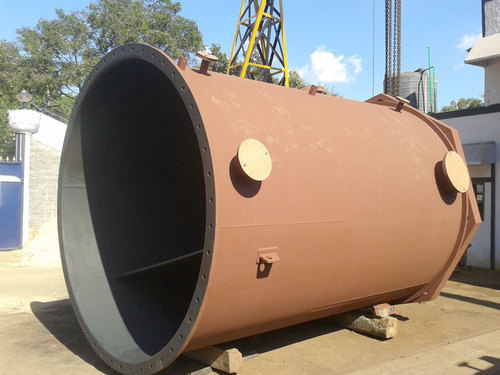
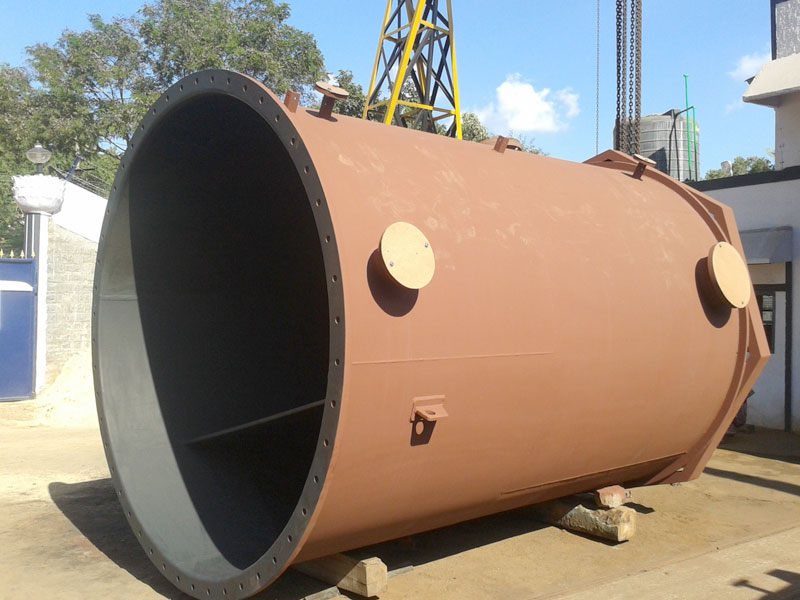
These tanks are typically fabricated using carbon steel or low-alloy steel as the base material. The steel shell provides mechanical strength and pressure-bearing capability. Welding is carried out under strict quality control procedures. Non-destructive testing ensures weld integrity and compliance with nuclear standards. The rubber lining and FRP coating are applied after fabrication. Each layer undergoes rigorous inspection and testing. This ensures defect-free construction. The result is a highly reliable containment system.
Nuclear power plant tanks with rubber lining and FRP exterior are designed to withstand extreme operating conditions. They can handle wide temperature ranges and varying pressure levels. The design accounts for seismic loads and thermal stresses. This is essential for nuclear facility safety. The tank geometry is optimized to prevent stress concentration. Proper supports and foundations are incorporated. This enhances overall system stability. Long-term operational safety is a primary design objective.
These tanks are commonly used for storage of borated water, chemical dosing solutions, and radioactive waste streams. They also serve in cooling water treatment and decontamination systems. The rubber lining prevents chemical interaction with the steel. This maintains purity of stored fluids. The FRP exterior protects against external corrosion. Such versatility makes the tank suitable for multiple nuclear applications. It supports safe and efficient plant operation. Reliability is critical in these systems.
Our Other Valuable Products
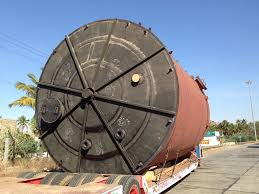
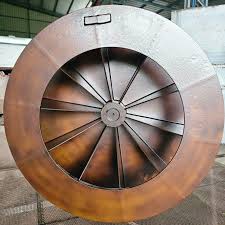
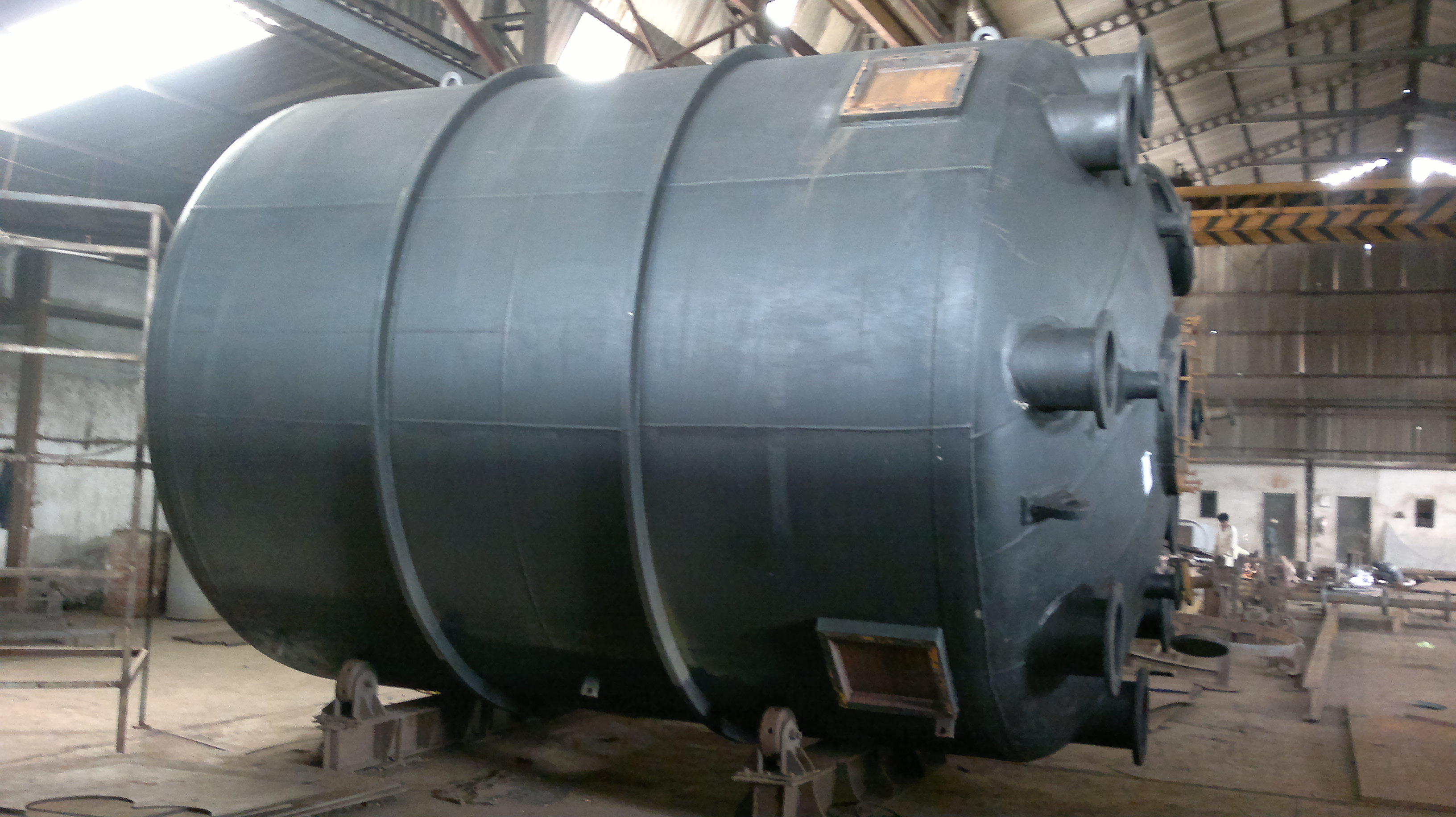
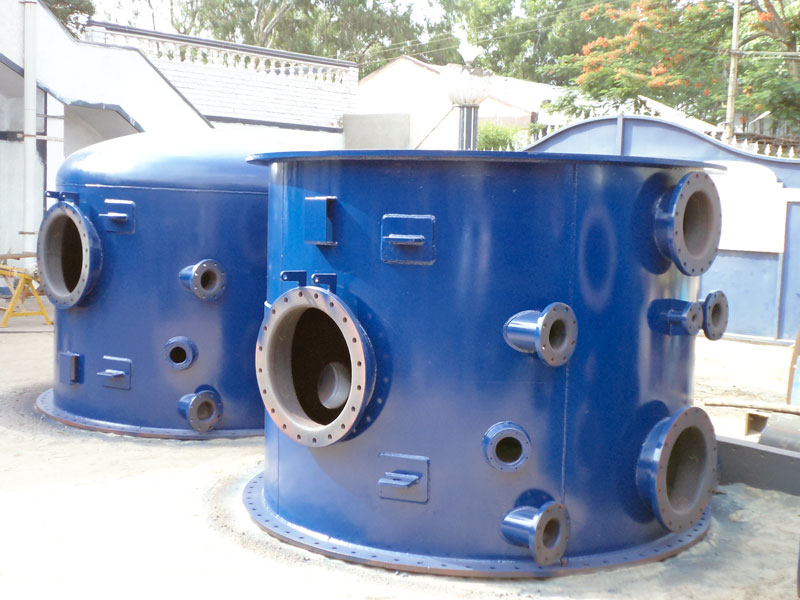
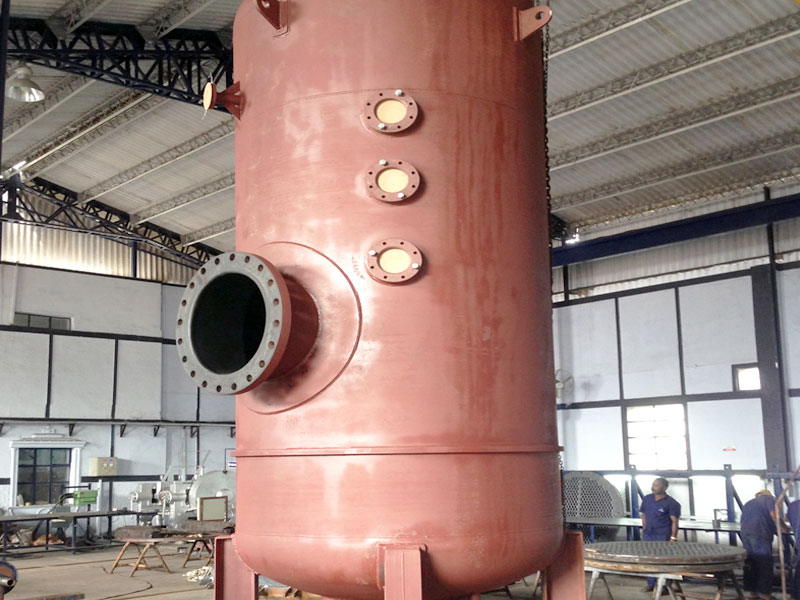


Quality assurance and compliance play a vital role in the fabrication of these tanks. Manufacturing follows international nuclear and pressure vessel standards. Each stage of production is documented and verified. Lining spark tests and holiday tests ensure rubber integrity. FRP thickness and curing are carefully controlled. Final hydrostatic testing confirms leak-free performance. This rigorous process guarantees safety and reliability. Compliance ensures acceptance by regulatory authorities.
Maintenance requirements for these tanks are relatively low compared to unprotected steel tanks. The rubber lining resists wear and chemical degradation. The FRP exterior minimizes repainting and corrosion repairs. Routine inspections help detect early signs of damage. Minor repairs can be carried out without dismantling the tank. This reduces downtime in nuclear operations. Long service intervals improve operational efficiency. Lifecycle costs are significantly reduced.
Specification of Nuclear Power Plant Tank With Inside Rubber Lining Exterior FRP
| Parameter | Specification |
|---|---|
| Tank Type | Nuclear Power Plant Process / Storage Tank |
| Base Material | Carbon Steel / Low Alloy Steel (as per design requirement) |
| Tank Capacity | Customized (Up to several thousand cubic meters) |
| Design Standard | ASME Section VIII, IS Codes, or equivalent Nuclear Standards |
| Internal Lining Material | Natural Rubber / Chlorobutyl / EPDM Rubber |
| Internal Rubber Lining Thickness | 3 mm – 10 mm (As per service condition) |
| Exterior Coating | FRP (Fiber Reinforced Plastic) with UV Resistant Gel Coat |
| FRP Thickness | 3 mm – 8 mm |
| Operating Temperature | -10°C to 120°C (Depending on lining material) |
| Design Pressure | Atmospheric to Low Pressure |
| Corrosion Resistance | Excellent resistance to chemicals, moisture, and radioactive fluids |
| Testing | Spark Test for Rubber Lining, FRP Thickness Test, Hydrostatic Test |
| Mounting | Vertical / Horizontal with Skirt or Saddle Support |
| Application | Borated Water, Chemical Storage, Radioactive Waste Handling |
| Service Life | 20–30 Years with Proper Maintenance |
Chemical Composition of Nuclear Power Plant Tank With Inside Rubber Lining Exterior FRP
| Component | Material | Chemical Composition / Description |
|---|---|---|
| Base Tank Shell | Carbon Steel / Low Alloy Steel |
Iron (Fe): Balance Carbon (C): 0.15 – 0.25% Manganese (Mn): 0.60 – 1.60% Silicon (Si): 0.15 – 0.40% Phosphorus (P): ≤ 0.035% Sulfur (S): ≤ 0.035% |
| Internal Rubber Lining | Natural Rubber / Chlorobutyl / EPDM |
Polymer Content: 85 – 95% Carbon Black: 20 – 35 phr Zinc Oxide: 3 – 5 phr Sulfur / Peroxide Cure System: As required Antioxidants & Accelerators: Trace |
| Exterior FRP Layer | Fiber Reinforced Plastic |
Resin (Vinyl Ester / Epoxy / Isophthalic Polyester): 60 – 70% Glass Fiber (E-glass): 30 – 40% Fillers & Additives: ≤ 5% UV Stabilizers & Pigments: Trace |
| Adhesive / Bonding System | Rubber-to-Metal & FRP Primer |
Phenolic / Chlorinated Rubber Based Adhesive Solvent Carriers: Balance Curing Agents: Trace |
Mechanical Properties of Nuclear Power Plant Tank With Inside Rubber Lining Exterior FRP
| Component | Property | Typical Value |
|---|---|---|
| Base Tank Shell (Carbon Steel / Low Alloy Steel) | Tensile Strength | 410 – 550 MPa |
| Yield Strength | 240 – 350 MPa | |
| Elongation | 20 – 30% | |
| Impact Strength | ≥ 27 J at -20°C | |
| Hardness | 120 – 180 HB | |
| Internal Rubber Lining | Tensile Strength | 12 – 20 MPa |
| Elongation at Break | 300 – 600% | |
| Hardness | 50 – 70 Shore A | |
| Abrasion Resistance | Excellent | |
| Exterior FRP Coating | Tensile Strength | 100 – 300 MPa |
| Flexural Strength | 150 – 400 MPa | |
| Compressive Strength | 200 – 450 MPa | |
| Impact Resistance | High | |
| Overall Tank Performance | Operating Temperature Range | -10°C to 120°C |
| Pressure Rating | Atmospheric to Low Pressure | |
| Service Life | 20 – 30 Years |
Safety is a critical advantage of nuclear power plant tanks with internal rubber lining and external FRP. The dual-layer protection minimizes the risk of leaks and structural failure. This is essential when handling hazardous or radioactive fluids. The materials used are selected for non-reactivity and stability. The design reduces the chance of environmental contamination. It supports strict nuclear safety protocols. Operational reliability is consistently maintained. This contributes to overall plant safety.
Pipe Testing Methods

Pipe Applications

We supply Pipes Worldwide.
Exporting Steel Pipes & Tubes to over 60 countries including Afghanistan, Albania, Andorra, Angloa, Austria, Australia, Bahrain, Bangladesh, Bhutan, Brazil, Brunei, Belarus, Belgium, Bulgaria, Cambodia, China, Cyprus, Croatia, Czech Republic, Canada, Denmark, Estonia, Egypt, Finland, France, Germany, Greece, Georgia, Hungary, Iceland, Ireland, Italy, Indonesia, Iran, Iraq, Israel, Japan, Jordan, Kazakhstan, Kuwait, Kyrgyzstan, Lebanon, Latvia, Latin America, Liechtenstein, Lithuania, Luxembourg, Malta, Madagascar, Mexico, Moldova, Monaco, Malaysia, Maldives, Mongolia, Myanmar (Burma), Nepal, New Zealand, North Korea, Netherlands, Norway, Nigeria, Oman, Poland, Portugal, Pakistan, Palestine, Philippines, Qatar, Russia, Romania, Russia, San Marino, Serbia and Montenegro, Slovakia, Slovenia, Spain, Sweden, Switzerland, Saudi Arabia, Singapore, South Korea, South Africa, Sri Lanka, Sudan, Syria, Taiwan, Tanzania, Tajikistan, Thailand, Turkey, Turkmenistan, Ukraine, United Kingdom, United Arab Emirates (UAE), Uzbekistan, Venezuela, Vietnam, Yemen, etc.