

Phophoric Tank Fabricated At Site For Fact Kerela Manufacturer Stockist Exporter
Phophoric Tank Fabricated At Site For Fact Kerela Manufacturer Stockist Exporter
A phosphoric acid storage tank fabricated at site for Kerala FACT facilities is designed to safely handle highly corrosive chemical media under continuous industrial operation. These tanks are typically required in fertilizer and chemical processing plants where large volumes of phosphoric acid are stored. Site fabrication allows customization according to available space, capacity requirements, and plant layout. The design considers long service life, operational safety, and ease of maintenance. Special attention is given to corrosion resistance due to the aggressive nature of phosphoric acid. The tank structure is engineered to withstand thermal and mechanical stresses. Fabrication at site minimizes transportation risks and logistical challenges. Such tanks are built in compliance with applicable industrial standards.
The material selection for a phosphoric tank fabricated at site is critical for ensuring durability and chemical compatibility. Carbon steel shells are commonly used with internal rubber lining or FRP lining to resist corrosion. In some cases, alloy steel or stainless steel components are incorporated in critical zones. The internal lining acts as a protective barrier against acid attack and prevents metal contamination. External surfaces are coated with anti-corrosive paints suitable for coastal and humid Kerala conditions. The materials are chosen based on operating temperature and acid concentration. Long-term exposure resistance is a key design parameter. This ensures consistent performance over decades of operation.
Site fabrication involves precise plate rolling, shell alignment, and welding operations performed directly at the FACT plant location. This approach allows fabrication of large-capacity tanks that cannot be easily transported. Skilled welders follow approved welding procedures to maintain joint integrity. Non-destructive testing such as radiography or dye penetrant testing is carried out at various stages. Dimensional accuracy is continuously monitored during erection. On-site fabrication also enables modifications based on real-time site conditions. Proper scaffolding and safety systems are deployed throughout the process. This ensures both construction efficiency and worker safety.
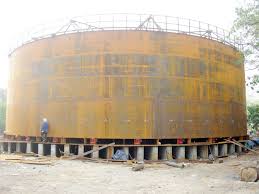
The internal lining system of a phosphoric acid tank fabricated at site plays a vital role in corrosion protection. Rubber lining is commonly applied due to its excellent resistance to phosphoric acid. Surface preparation, including grit blasting, is performed to ensure proper adhesion. Multiple layers of rubber sheets are bonded using specialized adhesives. Vulcanization is carried out to enhance mechanical strength and chemical resistance. In some designs, FRP lining is applied over a primer coat for additional protection. Quality inspection of lining thickness and continuity is mandatory. Any defects are rectified before commissioning.
Structural design considerations for the tank include wind load, seismic load, and hydrostatic pressure. Tanks fabricated at site in Kerala must also consider high humidity and monsoon conditions. The foundation is designed to evenly distribute the tank load and prevent settlement. Annular plates and bottom plates are carefully aligned to avoid stress concentration. Roof structures may be fixed cone type or dome type depending on vapor control requirements. Proper venting systems are incorporated to manage internal pressure. Reinforcement pads are provided at nozzle connections. These measures ensure structural stability throughout the service life.
Instrumentation and safety features are integral to phosphoric acid storage tanks at FACT Kerala. Level indicators, temperature sensors, and pressure vents are installed for operational monitoring. Overflow protection systems are designed to prevent accidental spills. Emergency drain nozzles are provided for safe handling during maintenance. Earthing and lightning protection are essential due to chemical plant safety norms. Access ladders, platforms, and handrails are fabricated as per safety standards. Manholes are positioned for easy inspection and cleaning. These features enhance operational control and safety compliance.
Our Other Valuable Products
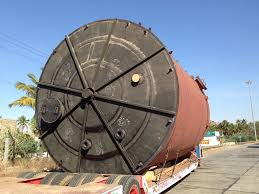
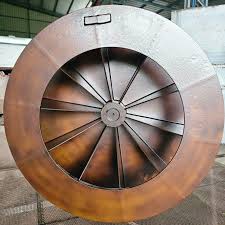
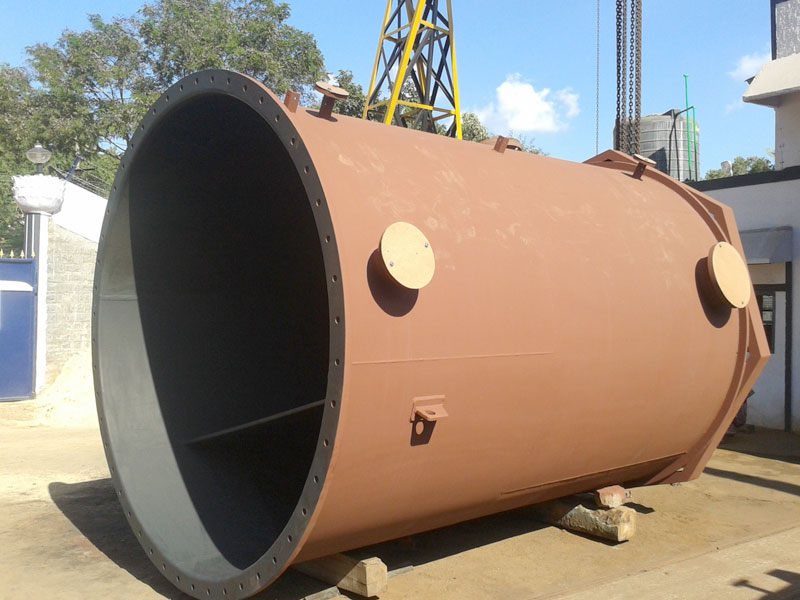
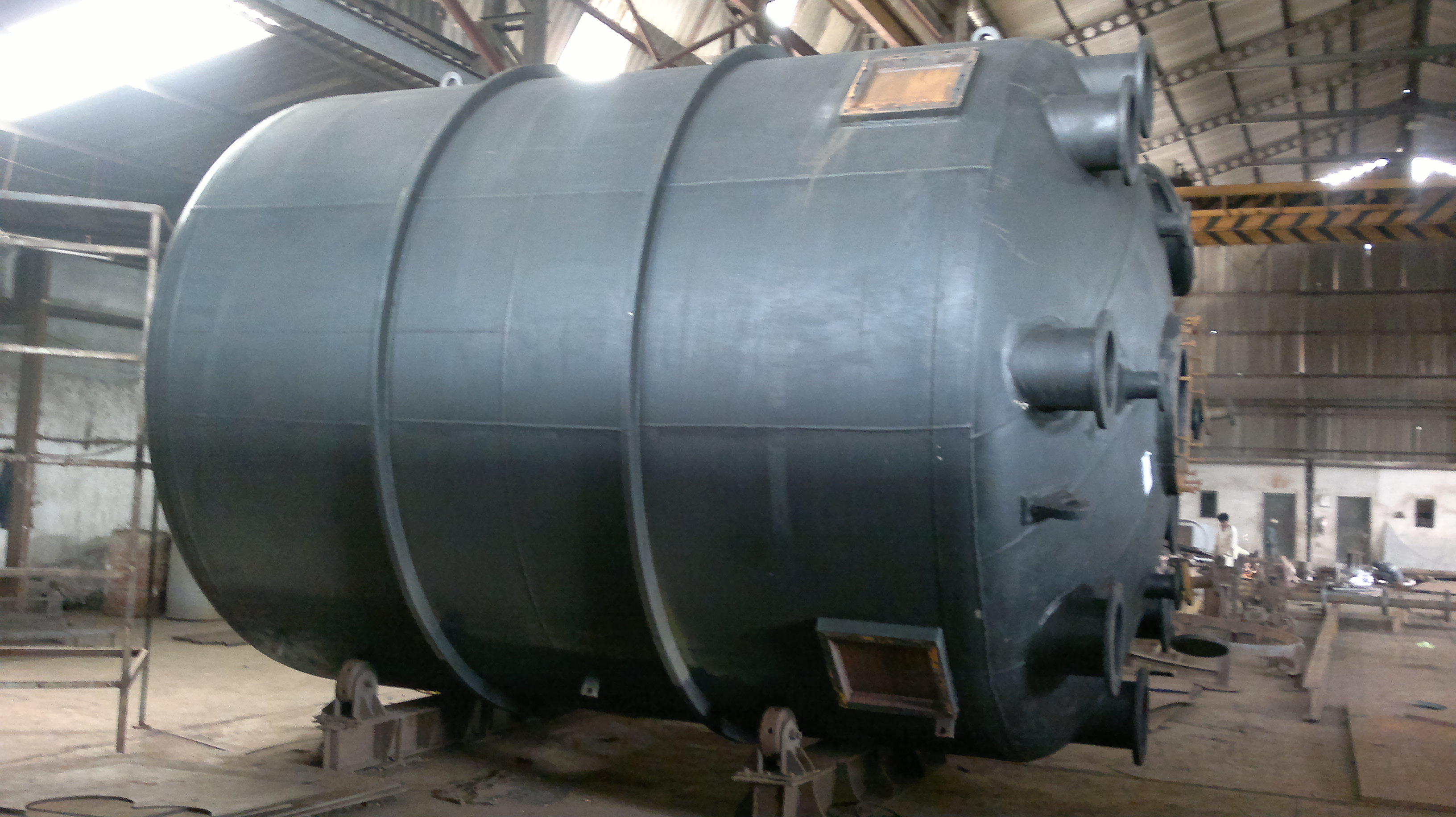
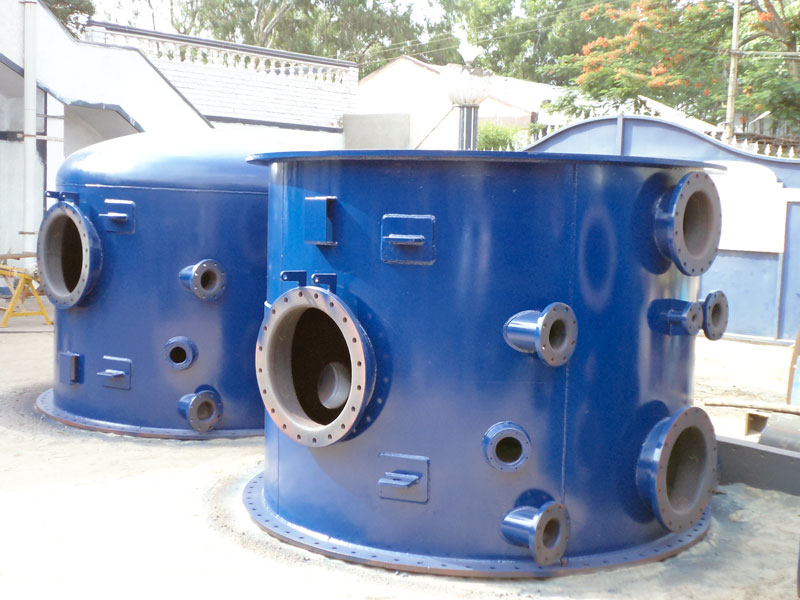
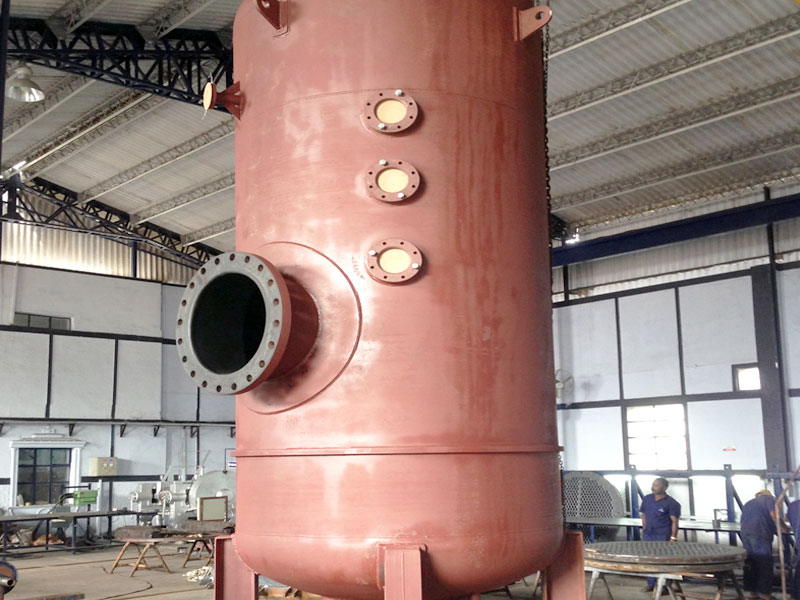


Quality control during site fabrication is maintained through strict inspection and testing procedures. Raw materials are verified against mill test certificates before use. Welding consumables are controlled and stored properly to avoid contamination. Visual inspection is carried out at every fabrication stage. Hydrostatic testing is conducted after completion to confirm leak-tightness. Lining spark testing ensures there are no pinholes or defects. All inspection results are documented for traceability. This systematic approach ensures high reliability of the tank.
Environmental protection is a major concern when installing phosphoric acid tanks at site. Secondary containment such as dyke walls is constructed around the tank area. Acid-resistant flooring systems are applied to prevent soil contamination. Proper drainage systems are designed to collect and neutralize any accidental leakage. Vent emissions are controlled to reduce environmental impact. The tank design complies with pollution control board guidelines. Noise and dust during fabrication are minimized through controlled practices. This ensures sustainable plant operation.
Specification of Phophoric Tank Fabricated At Site For Fact Kerela
| Parameter | Specification |
|---|---|
| Application | Storage of Phosphoric Acid for Fertilizer & Chemical Processing Plants |
| Location of Fabrication | Fabricated at Site – FACT Plant, :contentReference[oaicite:0]{index=0}, India |
| Tank Type | Vertical Cylindrical Storage Tank |
| Capacity Range | 50 KL to 5000 KL (Customizable as per Plant Requirement) |
| Design Standard | IS 803 / API 650 / Client-Specific Technical Specification |
| Shell Material | Carbon Steel IS 2062 / ASTM A516 Gr.70 |
| Bottom Plate Material | Carbon Steel with Corrosion Allowance |
| Roof Type | Fixed Cone Roof / Dome Roof |
| Internal Lining | Rubber Lining / FRP Lining suitable for Phosphoric Acid |
| Lining Thickness | 3 mm to 6 mm (Depending on Acid Concentration) |
| External Coating | Epoxy Primer + Polyurethane / Chlorinated Rubber Paint |
| Operating Temperature | Ambient to 80°C |
| Operating Pressure | Atmospheric |
| Corrosion Allowance | 2 mm to 3 mm |
| Nozzles | Inlet, Outlet, Overflow, Vent, Drain, Manhole |
| Manhole Size | 450 NB / 600 NB |
| Inspection & Testing | Visual Inspection, NDT, Hydrostatic Test, Spark Test for Lining |
| Foundation Type | RCC Foundation with Dyke Wall |
| Safety Features | Pressure Vent, Level Indicator, Earthing & Lightning Protection |
| Service Life | 20–25 Years with Proper Maintenance |
Chemical Composition of Phophoric Tank Fabricated At Site For Fact Kerela
| Component | Material Grade | Chemical Composition (%) |
|---|---|---|
| Shell Plates | ASTM A516 Gr.70 |
Carbon (C): ≤ 0.30 Manganese (Mn): 0.85 – 1.20 Silicon (Si): 0.13 – 0.45 Sulphur (S): ≤ 0.035 Phosphorus (P): ≤ 0.035 |
| Bottom Plates | IS 2062 E250 |
Carbon (C): ≤ 0.23 Manganese (Mn): ≤ 1.50 Silicon (Si): ≤ 0.40 Sulphur (S): ≤ 0.045 Phosphorus (P): ≤ 0.045 |
| Roof Plates | IS 2062 E250 |
Carbon (C): ≤ 0.23 Manganese (Mn): ≤ 1.50 Silicon (Si): ≤ 0.40 Sulphur (S): ≤ 0.045 Phosphorus (P): ≤ 0.045 |
| Nozzles & Flanges | ASTM A105 / ASTM A106 Gr.B |
Carbon (C): ≤ 0.35 Manganese (Mn): 0.60 – 1.05 Silicon (Si): 0.10 – 0.35 Sulphur (S): ≤ 0.040 Phosphorus (P): ≤ 0.035 |
| Internal Lining | Rubber Lining / FRP Lining |
Natural / Synthetic Rubber: Acid Resistant Polymer Base FRP Resin: Vinyl Ester / Isophthalic Polyester Reinforcement: E-glass Fiber |
| External Coating | Epoxy / Polyurethane System |
Epoxy Resin Base with Anti-Corrosive Pigments Polyurethane Top Coat for UV & Weather Resistance |
| Fasteners | High Tensile Carbon Steel |
Carbon (C): ≤ 0.40 Manganese (Mn): 0.60 – 1.00 Silicon (Si): ≤ 0.35 |
| Service Environment | Phosphoric Acid Storage Tank Fabricated at Site for FACT, :contentReference[oaicite:0]{index=0} – Designed for Acid Concentration up to 54% P₂O₅ | |
Mechanical Properties of Phophoric Tank Fabricated At Site For Fact Kerela
| Component | Material Grade | Tensile Strength (MPa) | Yield Strength (MPa) | Elongation (%) | Hardness |
|---|---|---|---|---|---|
| Shell Plates | ASTM A516 Gr.70 | 485 – 620 | ≥ 260 | ≥ 21 | ≤ 197 HB |
| Bottom Plates | IS 2062 E250 | 410 – 540 | ≥ 250 | ≥ 23 | ≤ 180 HB |
| Roof Plates | IS 2062 E250 | 410 – 540 | ≥ 250 | ≥ 23 | ≤ 180 HB |
| Nozzles & Flanges | ASTM A105 / ASTM A106 Gr.B | 485 – 655 | ≥ 250 | ≥ 22 | ≤ 187 HB |
| Structural Supports | IS 2062 E250 | 410 – 540 | ≥ 250 | ≥ 23 | ≤ 180 HB |
| Anchor Bolts | High Tensile Carbon Steel | 600 – 800 | ≥ 400 | ≥ 16 | ≤ 220 HB |
| Rubber Lining | Acid Resistant Rubber | — | — | ≥ 300 | 60 – 70 Shore A |
| FRP Lining (if applicable) | Vinyl Ester Based FRP | 80 – 150 | — | 2 – 5 | Barcol 35 – 45 |
| Design Condition | Atmospheric Pressure, Operating Temperature up to 80°C, Phosphoric Acid Service – FACT Plant, :contentReference[oaicite:0]{index=0} | — | |||
Maintenance considerations are incorporated at the design stage of phosphoric tanks fabricated at site. Easy access for inspection helps in early detection of lining damage. Periodic thickness measurement of shell plates is facilitated through inspection ports. Rubber lining repair procedures are planned to minimize downtime. External coating systems are selected for long repainting cycles. Spare nozzles and provisions are included for future expansion. Proper documentation supports efficient maintenance planning. This reduces lifecycle operational costs significantly.
Pipe Testing Methods

Pipe Applications

We supply Pipes Worldwide.
Exporting Steel Pipes & Tubes to over 60 countries including Afghanistan, Albania, Andorra, Angloa, Austria, Australia, Bahrain, Bangladesh, Bhutan, Brazil, Brunei, Belarus, Belgium, Bulgaria, Cambodia, China, Cyprus, Croatia, Czech Republic, Canada, Denmark, Estonia, Egypt, Finland, France, Germany, Greece, Georgia, Hungary, Iceland, Ireland, Italy, Indonesia, Iran, Iraq, Israel, Japan, Jordan, Kazakhstan, Kuwait, Kyrgyzstan, Lebanon, Latvia, Latin America, Liechtenstein, Lithuania, Luxembourg, Malta, Madagascar, Mexico, Moldova, Monaco, Malaysia, Maldives, Mongolia, Myanmar (Burma), Nepal, New Zealand, North Korea, Netherlands, Norway, Nigeria, Oman, Poland, Portugal, Pakistan, Palestine, Philippines, Qatar, Russia, Romania, Russia, San Marino, Serbia and Montenegro, Slovakia, Slovenia, Spain, Sweden, Switzerland, Saudi Arabia, Singapore, South Korea, South Africa, Sri Lanka, Sudan, Syria, Taiwan, Tanzania, Tajikistan, Thailand, Turkey, Turkmenistan, Ukraine, United Kingdom, United Arab Emirates (UAE), Uzbekistan, Venezuela, Vietnam, Yemen, etc.