

Tank With Exterior Frp Grid Plates Assembled For Travancore Titanium Ltd Manufacturer Stockist Exporter
Tank With Exterior Frp Grid Plates Assembled For Travancore Titanium Ltd Manufacturer Stockist Exporter
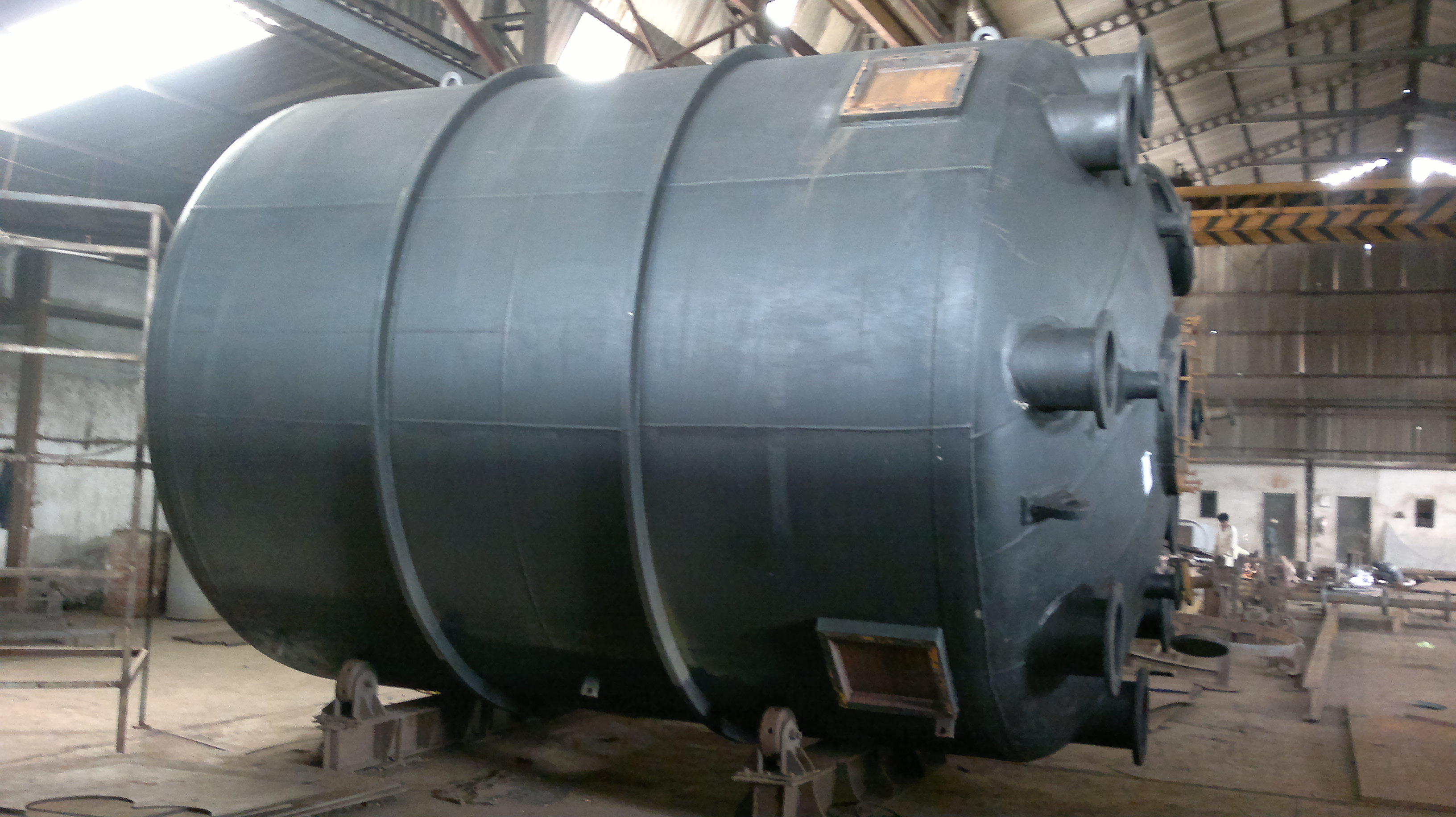
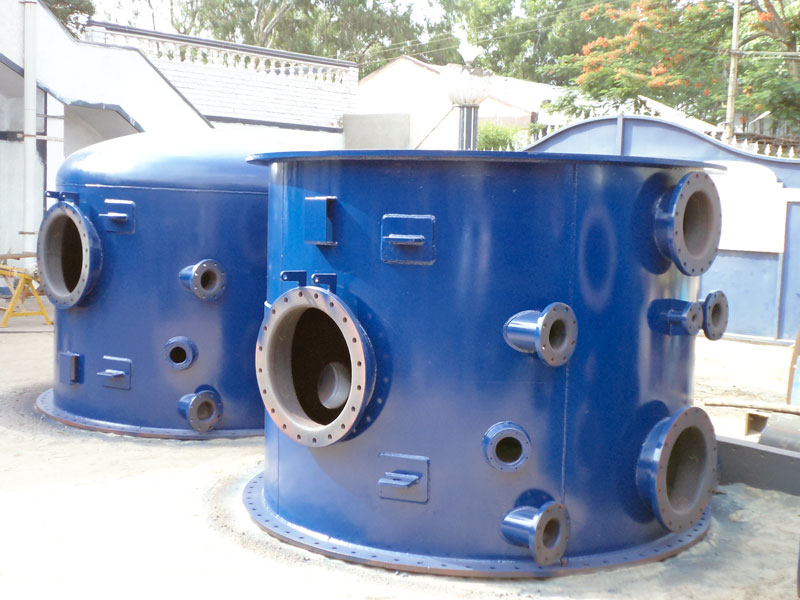
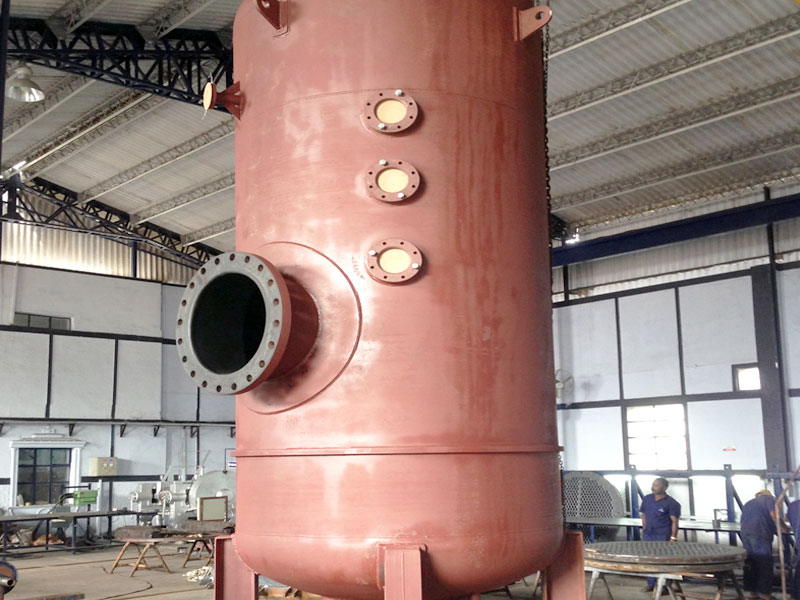
The tank with exterior FRP grid plates assembled for Travancore Titanium Ltd is designed to meet demanding industrial service conditions. This tank configuration combines a robust metallic or lined tank structure with corrosion-resistant FRP grid plates installed on the exterior. The arrangement enhances safety, durability, and ease of maintenance around the tank periphery. FRP grid plates act as protective walkways and platforms for operators. They also prevent direct exposure of personnel to corrosive environments. The assembly is engineered to support operational loads without compromising tank integrity. This solution is ideal for chemical processing facilities. It reflects a balance between structural strength and corrosion protection.
Exterior FRP grid plates are selected for their excellent resistance to chemicals, moisture, and harsh atmospheres. In titanium dioxide and chemical processing plants, airborne fumes and splashes can rapidly degrade conventional steel platforms. FRP grid plates eliminate corrosion-related failures common with metallic gratings. Their non-conductive and non-sparking properties improve plant safety. The grid structure allows drainage of liquids, reducing slip hazards. Lightweight construction minimizes additional load on the tank shell. This makes them suitable for retrofit as well as new installations. Long-term performance is ensured with minimal maintenance.
The tank itself is fabricated to handle aggressive process media and operational stresses. Depending on service requirements, it may be mild steel, rubber lined steel, or other corrosion-resistant construction. The exterior FRP grid plates are mechanically supported without transferring undue stress to the tank shell. Proper spacing and anchoring ensure load distribution and stability. Access points such as manholes, nozzles, and inspection ports remain unobstructed. The integrated design supports smooth plant operations. Structural compatibility between tank and grid plates is carefully engineered. This ensures safety under continuous industrial use.
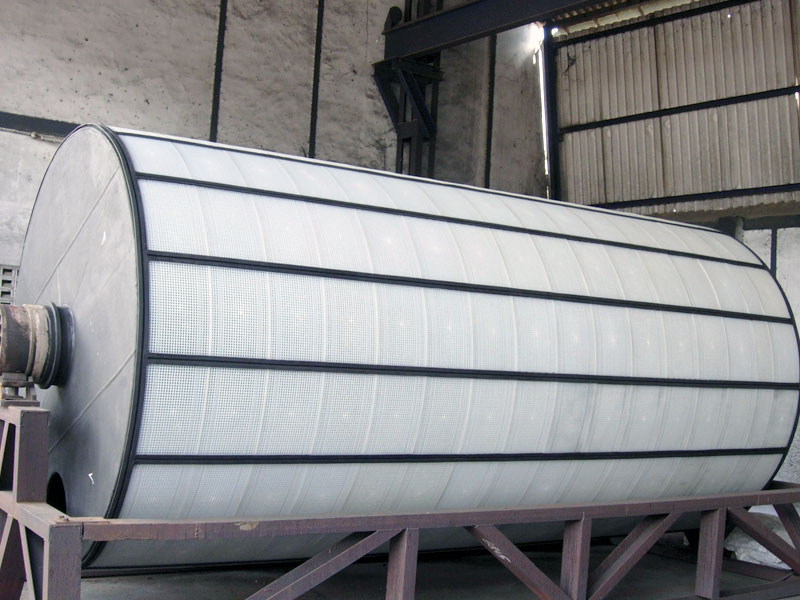
Assembly of exterior FRP grid plates is carried out following strict installation procedures. Support brackets, frames, and fasteners are designed to resist corrosion and vibration. FRP grids are cut and fitted precisely to match tank geometry. Adequate clearances are maintained to accommodate thermal expansion. Anti-slip surfaces enhance operator safety during inspection and maintenance. The modular nature of FRP grids allows easy removal and replacement if required. Installation can be performed at the fabrication yard or at site. This flexibility reduces project downtime and installation complexity.
The use of FRP grid plates significantly improves operational safety around the tank. Operators can safely access valves, instruments, and inspection points without stepping on corroded surfaces. The grating design provides excellent traction even in wet conditions. Guardrails and handrails can be integrated with the FRP grid system. This creates a secure working platform around the tank. Improved access supports routine inspections and preventive maintenance. Reduced risk of slips and falls enhances overall plant safety. This is particularly important in chemical-intensive environments.
From a corrosion protection standpoint, exterior FRP grid plates act as a secondary defense. They shield the tank surface from direct mechanical damage and localized exposure. Chemical splashes and condensates drain through the grating rather than accumulating. This minimizes external corrosion of the tank shell. FRP materials are unaffected by most acids and chemical vapors. As a result, the surrounding structure remains intact for extended periods. This contributes to longer tank service life. Maintenance costs are significantly reduced over time.
Our Other Valuable Products


Quality control is an essential part of assembling tanks with exterior FRP grid plates. FRP material properties such as load rating, resin type, and grating thickness are verified. Installation alignment and fastening integrity are checked thoroughly. Load-bearing capacity is assessed to ensure compliance with design requirements. Visual inspections confirm proper fit and finish. Documentation is maintained for material traceability and installation checks. This ensures compliance with project and safety standards. Consistent quality guarantees reliable long-term performance.
The tank with exterior FRP grid plates is well suited for demanding industrial sectors. In facilities like titanium dioxide production, exposure to corrosive chemicals is unavoidable. This design supports continuous operation with minimal interruption. It also improves accessibility for monitoring and control activities. The system can be customized based on tank size and plant layout. FRP grid color and configuration can be adapted to site standards. This adaptability makes it suitable for complex process plants. The solution integrates seamlessly into existing infrastructure.
Specification of Tank With Exterior Frp Grid Plates Assembled For Travancore Titanium Ltd
| Specification of Tank With Exterior FRP Grid Plates Assembled | |
|---|---|
| End User | Travancore Titanium Ltd |
| Tank Application | Chemical Processing / Storage Service |
| Tank Construction | Mild Steel / Rubber Lined Steel / As per service requirement |
| Tank Orientation | Vertical / Horizontal |
| Tank Capacity | Custom Designed as per process requirement |
| Exterior Platform Type | FRP Grid Plates / FRP Grating |
| FRP Grating Resin System | Isophthalic / Vinyl Ester / Polyester |
| FRP Grating Thickness | 25 mm – 38 mm (Based on load requirement) |
| FRP Grating Color | Grey / Yellow / Green (As per site standard) |
| Load Bearing Capacity | Heavy Duty – Suitable for maintenance personnel & equipment |
| Surface Finish | Anti-Slip Gritted / Molded Surface |
| Support Structure | FRP / GI / SS Support Frames & Brackets |
| Fasteners | SS / FRP / Corrosion Resistant Fasteners |
| Corrosion Resistance | Excellent – Resistant to chemical fumes & splashes |
| Operating Temperature | -10°C to 80°C (FRP grade dependent) |
| Installation Location | Fabrication Yard / Site Assembled |
| Inspection & Quality Checks | Visual Inspection, Load Check, Fitment Verification |
| Applicable Standards | ASTM / ISO / Customer Specification |
| Expected Service Life | 15 – 25 Years (With minimal maintenance) |
Chemical Composition of Tank With Exterior Frp Grid Plates Assembled For Travancore Titanium Ltd
| Chemical Composition of Tank With Exterior FRP Grid Plates | |
|---|---|
| Tank Base Material | Mild Steel / Carbon Steel (IS 2062 / Equivalent) |
| Carbon (C) | 0.15% – 0.25% |
| Manganese (Mn) | 0.60% – 1.50% |
| Silicon (Si) | 0.10% – 0.40% |
| Sulphur (S) | ≤ 0.045% |
| Phosphorus (P) | ≤ 0.045% |
| Iron (Fe) | Balance |
| FRP Grating Resin Type | Isophthalic Polyester / Vinyl Ester / Orthophthalic Polyester |
| Glass Fiber Content | 30% – 45% (E-Glass Rovings & Mats) |
| Resin Content | 55% – 70% |
| Fillers & Additives | Silica, Alumina, UV Stabilizers, Fire Retardant Additives |
| Surface Grit | Silica Grit / Aluminum Oxide (Anti-Slip) |
| Fastener Material | Stainless Steel / FRP / Corrosion Resistant Alloy |
Mechanical Properties of Tank With Exterior Frp Grid Plates Assembled For Travancore Titanium Ltd
| Mechanical Properties of Tank With Exterior FRP Grid Plates | |
|---|---|
| Tank Base Material | Mild Steel / Carbon Steel (IS 2062 / Equivalent) |
| Yield Strength (Tank Steel) | ≥ 250 MPa |
| Tensile Strength (Tank Steel) | 410 – 540 MPa |
| Elongation (Tank Steel) | ≥ 20% |
| Hardness (Tank Steel) | 120 – 180 HB |
| FRP Grating Flexural Strength | 200 – 300 MPa |
| FRP Grating Tensile Strength | 150 – 250 MPa |
| FRP Grating Modulus of Elasticity | 20 – 30 GPa |
| FRP Grating Impact Resistance | High – Resistant to cracking under service loads |
| FRP Grating Hardness | 40 – 60 Barcol |
| Load Bearing Capacity | Heavy Duty – Suitable for maintenance personnel & tools |
| Slip Resistance | Excellent – Gritted / Molded Anti-Slip Surface |
| Thermal Expansion | Accommodated through flexible supports and clearances |
| Operating Temperature Range | -10°C to 80°C (FRP resin dependent) |
| Fatigue Resistance | Good under cyclic loads and vibration |
| Expected Service Life | 15 – 25 Years (With minimal maintenance) |
Maintenance of exterior FRP grid plates is minimal compared to conventional steel platforms. There is no need for frequent repainting or corrosion repair. Periodic visual inspection is usually sufficient to ensure serviceability. Any damaged grid section can be replaced independently. This modular maintenance approach reduces downtime. The tank exterior remains protected during maintenance activities. Overall lifecycle costs are significantly lower. This makes the system economically attractive for long-term projects.
Pipe Testing Methods

Pipe Applications

We supply Pipes Worldwide.
Exporting Steel Pipes & Tubes to over 60 countries including Afghanistan, Albania, Andorra, Angloa, Austria, Australia, Bahrain, Bangladesh, Bhutan, Brazil, Brunei, Belarus, Belgium, Bulgaria, Cambodia, China, Cyprus, Croatia, Czech Republic, Canada, Denmark, Estonia, Egypt, Finland, France, Germany, Greece, Georgia, Hungary, Iceland, Ireland, Italy, Indonesia, Iran, Iraq, Israel, Japan, Jordan, Kazakhstan, Kuwait, Kyrgyzstan, Lebanon, Latvia, Latin America, Liechtenstein, Lithuania, Luxembourg, Malta, Madagascar, Mexico, Moldova, Monaco, Malaysia, Maldives, Mongolia, Myanmar (Burma), Nepal, New Zealand, North Korea, Netherlands, Norway, Nigeria, Oman, Poland, Portugal, Pakistan, Palestine, Philippines, Qatar, Russia, Romania, Russia, San Marino, Serbia and Montenegro, Slovakia, Slovenia, Spain, Sweden, Switzerland, Saudi Arabia, Singapore, South Korea, South Africa, Sri Lanka, Sudan, Syria, Taiwan, Tanzania, Tajikistan, Thailand, Turkey, Turkmenistan, Ukraine, United Kingdom, United Arab Emirates (UAE), Uzbekistan, Venezuela, Vietnam, Yemen, etc.